
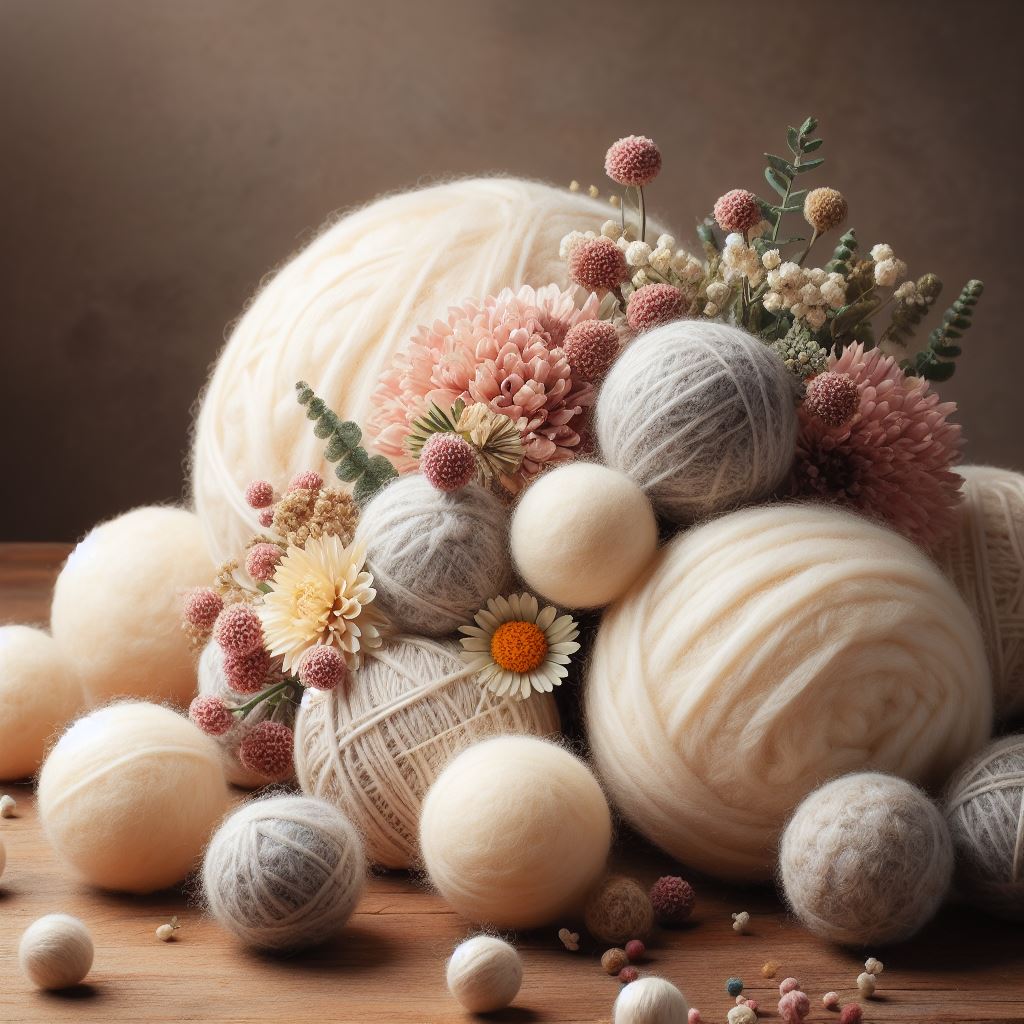
In a sustainable environment, the use of wool can have several positive environmental impacts, depending on various factors such as production methods, processing techniques, and disposal practices. Let’s explore these impacts, focusing on wool crafts and products, including wool dryer balls, and conclude with the overall benefits of incorporating wool into a sustainable lifestyle.
Positive Environmental Impacts:
- Renewable Resource: Wool is a renewable and biodegradable natural fiber derived from sheep. Unlike synthetic materials derived from fossil fuels, wool comes from a sustainable and replenishable source.
- Carbon Sequestration: Sheep farming, when managed sustainably, can contribute to carbon sequestration. Grazing sheep can help maintain healthy grasslands, which act as carbon sinks, absorbing and storing carbon dioxide from the atmosphere.
- Longevity and Durability: Wool products are known for their longevity and durability. High-quality wool items, such as clothing and home textiles, can last for many years with proper care, reducing the need for frequent replacements and minimizing waste.
- Low Environmental Impact Processing: Compared to the production of synthetic fibers, the processing of wool typically requires less energy and generates fewer greenhouse gas emissions. Additionally, many wool processing facilities adhere to eco-friendly practices, such as using renewable energy sources and minimizing water usage and chemical inputs.
In a sustainable environment, the use of wool crafts and products, including wool dryer balls, can offer several environmental benefits. By choosing high-quality wool items made from ethically sourced and sustainably produced wool, consumers can support responsible sheep farming practices and contribute to carbon sequestration through well-managed grazing systems.
Overall, the environmental impacts of wool can be managed and minimized through sustainable production practices, responsible consumption choices, and proper waste management strategies. By embracing wool crafts and products in a sustainable manner, individuals can enjoy the benefits of this natural fiber while minimizing its environmental footprint.